How many Stars & Galaxies are There in the Universe? Exploring Galaxies, Light-Years and Space
At night, we see numerous stars in the sky, but the nearest star in the daytime is our Sun. All the stars we see at night are just like our Sun. Some of them are bigger than the Sun, some are equal, and some are smaller. All these stars are so far from our Sun that we can’t send a robotic mission to any of them. It seems impossible in the near future, but we might be able some time to do so.
Our Sun is just one Star
Our Sun is the nearest star. Its light reaches us in 8 minutes and 20 seconds, traveling 150 million kilometers, and that’s why we see an 8 minutes and 20 seconds-old Sun. We can’t see the Sun until its light reaches us. How far away are the observable stars? One of the nearest stars after the Sun is 4.5 light-years away from us. Now, one can imagine the vastness of the universe. The stars we see at night are only a small portion of the stars in the sky.
How many Stars are in the Galaxies, especially in the Milky Way?
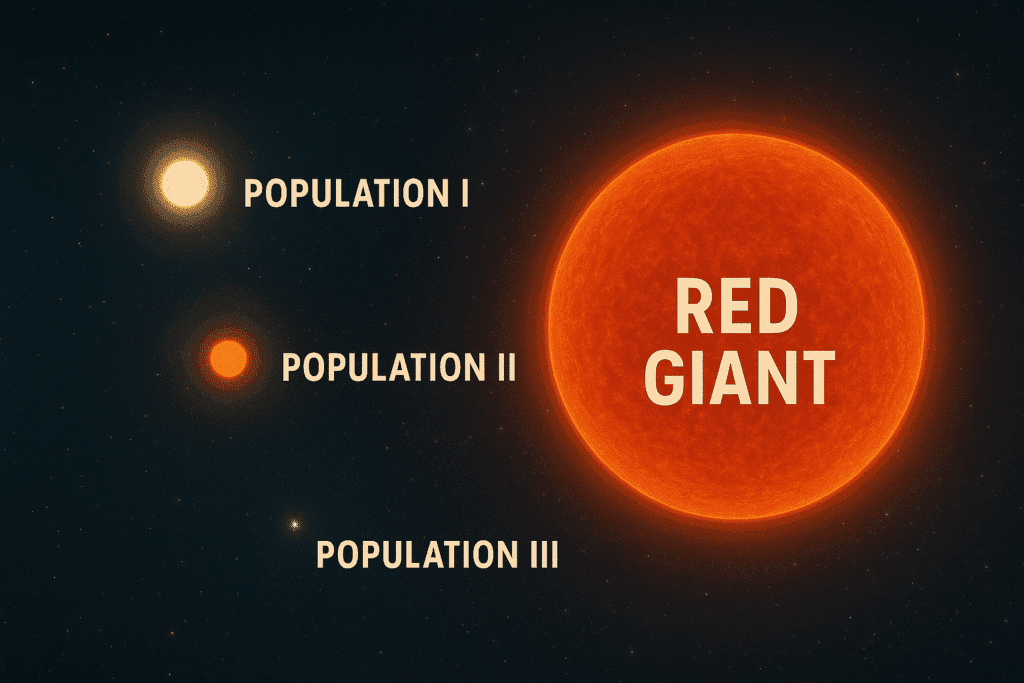
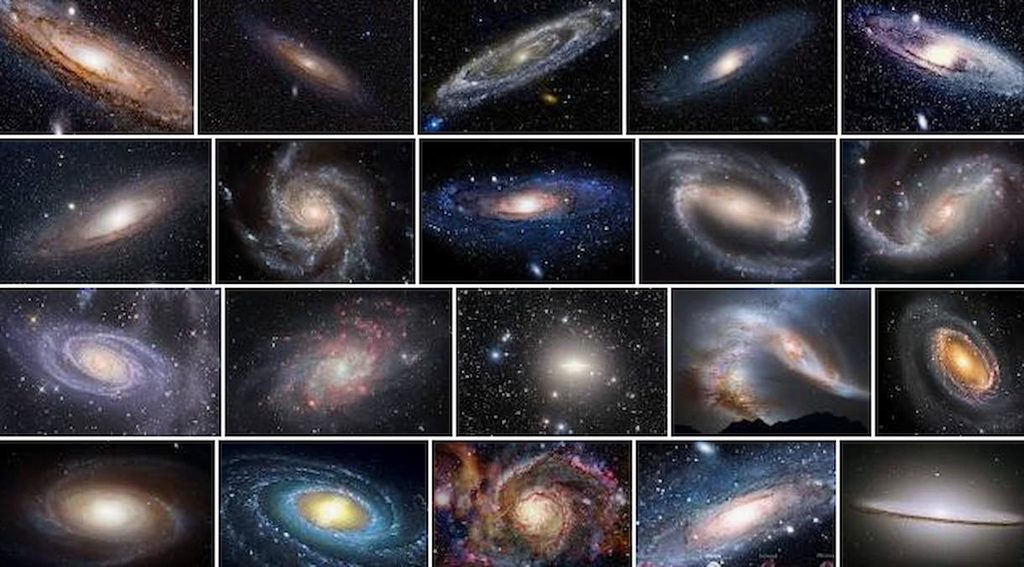
There are approximately 2,000,000,000,000 (2 trillion) galaxies in the universe, but astronomers cannot determine how many stars are in each galaxy because most are located at vast distances from us. However, we can reliably estimate the number of stars in our own galaxy, the Milky Way. Stars come in various sizes and colors, and a star’s color provides important information about its surface temperature. Hotter stars tend to appear blue or blue-white, while cooler stars can appear orange or red. The Sun, which is considered an average-temperature star, appears yellowish-white when viewed from space.
Our Sun is a white-hot star of average size and mass. The temperature at its core reaches 15 million degrees Celsius. Larger and hotter stars, like Vega, appear blue. Vega is the brightest star in the northern constellation of Lyra and is located 25 light-years away from Earth. In contrast, smaller, lighter, and fainter stars are red, such as Proxima Centauri. Proxima Centauri is a small, low-mass star in the southern constellation, situated 4.2465 light-years away from the Sun.
Besides the Sun, the nearest red, white, and blue stars give light in different amounts. With the light measurement of a star, especially its color and blaze, astronomers can estimate the number of stars in our galaxy. They have estimated that there are about 100-400 billion stars in the Milky Way. Because galaxies vary enormously in size and the number of stars they contain, astronomers cannot give an exact count of all the stars in the observable universe. Some estimates suggest there could be as many as one septillion stars. This number is so huge that it is difficult to imagine.
How big can a Star become?
Some red supergiant and hypergiant stars are hundreds or even more than a thousand times wider than the Sun. UY Scuti is often mentioned among the largest known stars, although estimates of stellar sizes can change as astronomers improve their observations.
How do astronomers estimate the number of Stars in a Galaxy?
They use observations of:
- the galaxy’s brightness
- its mass
- the colors and types of stars
- infrared observations
- stellar populations
- models of star formation
- gravitational effects
- observations of comparable galaxies
Astronomers cannot simply count every star in a distant galaxy one by one. Instead, they estimate the number of stars by studying a galaxy’s brightness, mass, stellar populations and other measurable properties. They compare these observations with models of how stars form and evolve.
How the James Webb Space Telescope is changing our view of the Universe
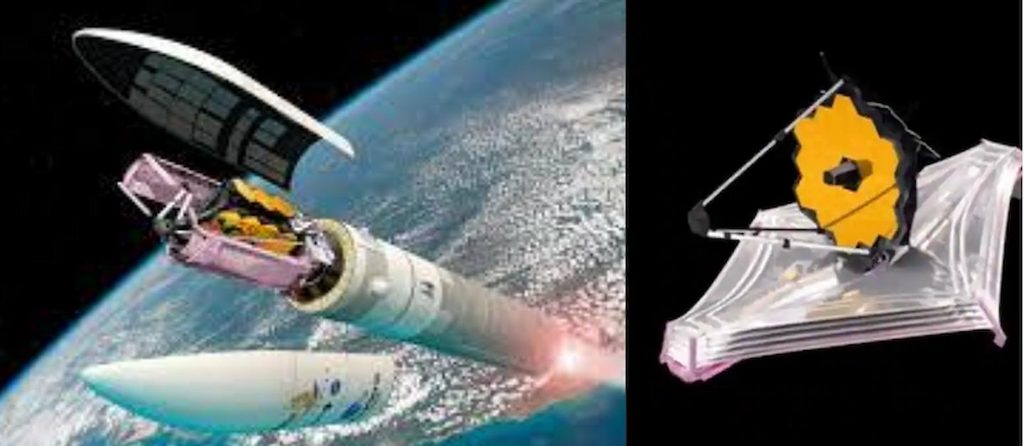
The James Webb Space Telescope has transformed our view of the early universe. One of its remarkable discoveries, JADES-GS-z14-0, is the most distant known galaxy according to NASA’s current information. Its light comes from a time less than 300 million years after the Big Bang.
This telescope has seen a lot of galaxies that seem exceptionally far away from us. Astronomers use measurements of redshift, along with other observations and distance indicators, to study how far away and how quickly distant galaxies are moving away from us.
Voyager: Humanity’s longest journey into deep Space
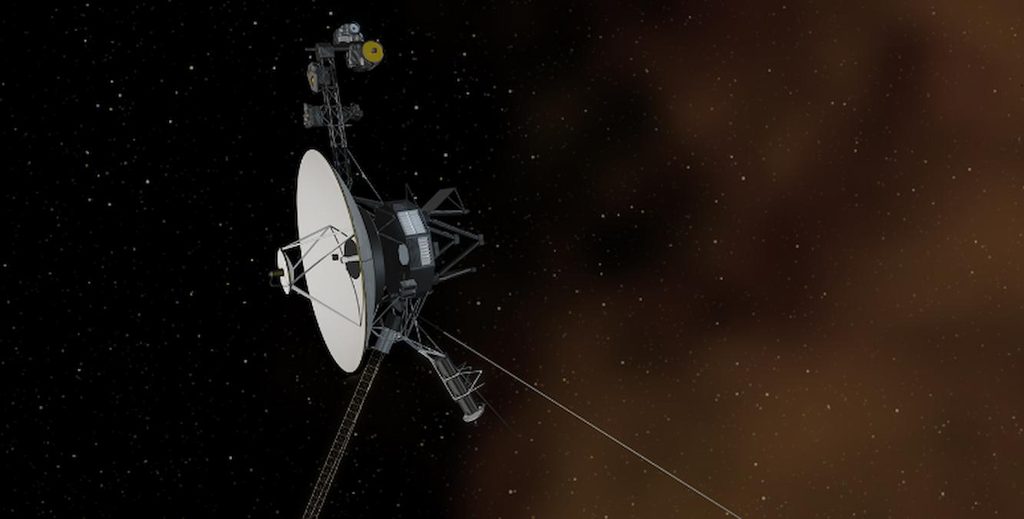
Voyager-1 and 2 were launched in 1977 for universal research. The experts are trying to shut down some of their systems to save energy. Despite closing their heaters in the previous three years, both Voyagers are continuously operating below the temperature at which they were tested. It is a miracle of sophisticated engineering that both Voyagers are still there even after half a century. It is unbelievable that both Voyagers are run by radioactive plutonium reactors, which continuously provide electricity to the tiny computers on board that have been running for decades without any pause.
The purpose of these missions was to get information and send pictures of Saturn and Jupiter and their moons. The Voyager-1 took a picture of the Earth at a distance of 3.7 billion miles from the Sun, in which the Earth looks like a tiny blue dot. Voyager 1 and Voyager 2 are now tens of billions of kilometers from Earth, traveling through interstellar space. Their distances continue to increase as they move farther from the Sun, where our Sun looks like any other bright star. The pair are still doing science.
Why do astronomers use Light-Years?
Cosmic distances are measured in light-years. Light travels a distance of 300,000 kilometers per second in a vacuum. A light-year is the distance light travels in one year, which is about 9.46 trillion kilometers. There are 86400 seconds in a day. Light travels 25 billion 92 crore kilometers in a single day.
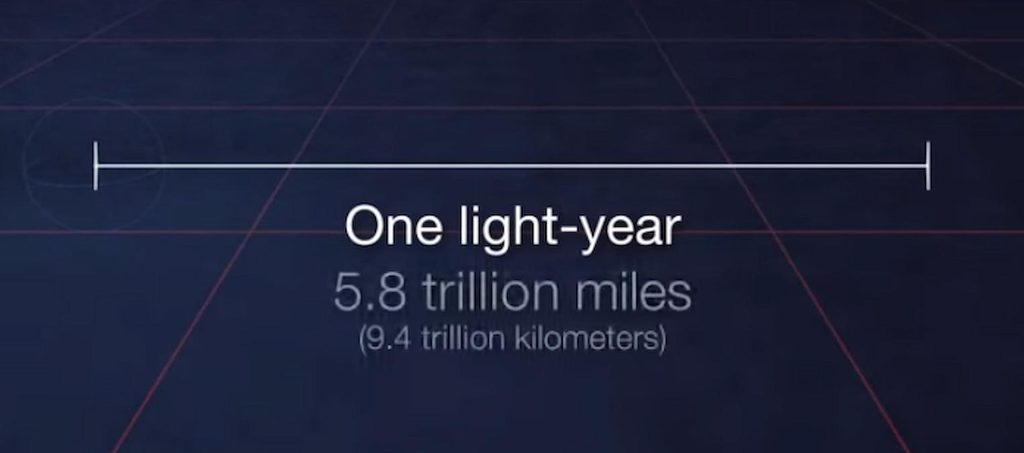
We can’t measure the distance between the stars and outside the solar system with kilometers and miles. For instance, the star Alpha Centauri (a triple star system in the southern constellation of Centaurus) is located at a distance of 4.25 light-years. Imagine how massive this distance is. To appreciate the scale of interstellar distances, imagine a spacecraft traveling continuously at 60,000 kilometers per hour. At that speed, a journey to the Alpha Centauri system, about 4.25 light-years away, would take roughly 76,000 years.
Remember that the Voyager Spacecraft is traveling at the same speed towards our neighboring star. It has traveled for 46 years since its launch from Earth. In these 46 years, it has traveled more than 26 billion kilometers away from us.
🌠 Did You Know?
When you look at the night sky, you are looking into the past. The light from some stars may have traveled for years before reaching your eyes, while light from distant galaxies can have traveled for billions of years. In astronomy, a telescope is therefore not only a tool for seeing farther, but it is also a kind of time machine.
The Universe is still full of Mysteries
Even with powerful telescopes such as the James Webb Space Telescope, astronomers have explored only a tiny fraction of what lies beyond Earth. Every deeper observation can reveal new galaxies, unusual stars, distant planets, and phenomena that challenge our understanding of the cosmos.
One of the most fascinating things about astronomy is that looking farther into space also means looking further back in time. Light takes time to travel, so when we observe a distant galaxy, we are seeing it as it existed millions or even billions of years ago.
There are also enormous questions that scientists are still trying to answer. What exactly is dark matter? What is driving the accelerated expansion of the universe? How did the first stars and galaxies form? Are there other worlds where life could exist?
These questions remind us that astronomy is not simply about counting stars or measuring distances. It is about understanding where we came from, how the universe evolved, and whether Earth is the only place where life has emerged.
For anyone curious about space, perhaps the most exciting fact is this: we have discovered a great deal about the universe, but there is still far more that we do not know.
The Universe is far bigger than we can imagine.
The more astronomers discover about the universe, the more enormous and mysterious it appears. We can estimate the number of stars in our galaxy, identify billions of galaxies, measure distances in light-years, and observe galaxies whose light began traveling toward Earth billions of years ago. Yet we still cannot count every star individually or fully understand everything that lies beyond the observable universe.
From the Sun only a few minutes away in light-travel time, to galaxies billions of light-years distant, the scale of the cosmos is almost impossible to imagine. Space telescopes such as Hubble and James Webb, together with missions such as Voyager, continue to expand our understanding of this extraordinary universe.