English communication, especially in this digital era, is changing faster than ever before. The widespread use of digital apps and devices, including artificial intelligence, smartphones, social media, and instant messaging, has created an entirely new style of writing that blends traditional grammar with digital communication habits. This modern style is often called “Digilect Grammar,” a form of language shaped by texting culture, online conversations, AI tools, emojis, abbreviations, and fast digital interaction.
Millions of people communicate online every second through different digital resources, including social media posts, emails, chats, blogs, and AI-powered platforms, making grammar more flexible, conversational, and speed-focused. However, formal English Grammar still matters in academics and professional writing. Now, Digital Communication has introduced new rules and habits that are changing how English is used globally.
What is Digilect Grammar?
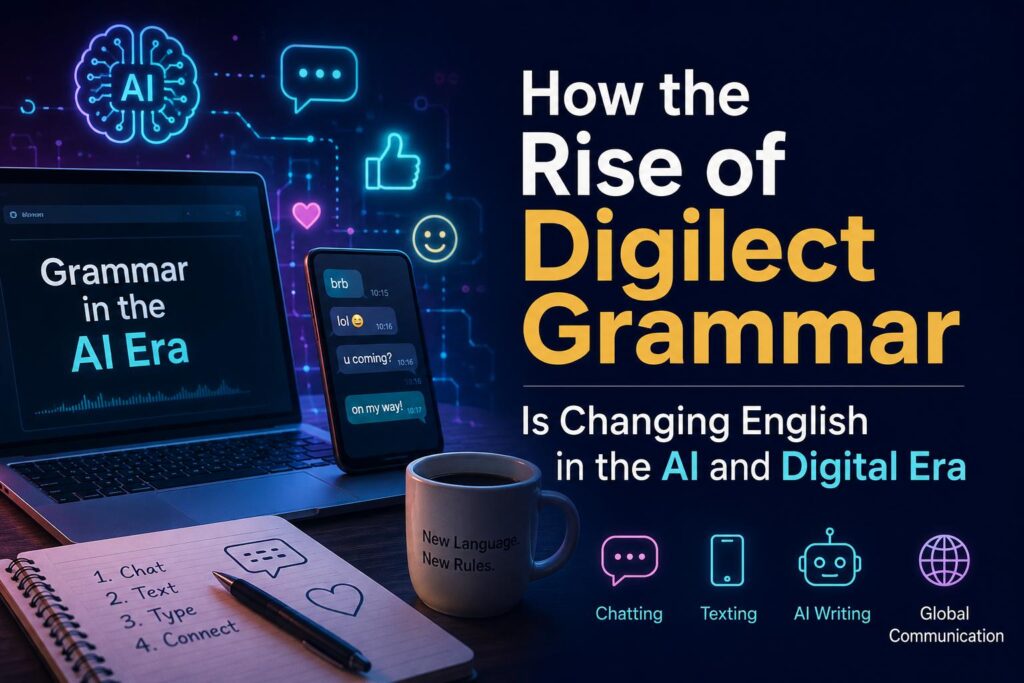
The modern style of English shaped by Digital Communication is known as Digilect Grammar. It combines traditional grammar with internet slang, shortened sentences, emojis, abbreviations, conversational writing, and AI-assisted language patterns.
This type of communication emerged naturally as people began interacting more through smartphones, social media, messaging apps, and online platforms. Digilect Grammar emphasizes speed, clarity, engagement, and emotional expression, rather than adhering to strict formal writing rules.
The origin of Digilect Communication in the age of the Internet
Internet chatrooms, email, texting, and online forums have contributed to the rise of Digital Communication. Shorter ways to communicate quickly were created by the early internet users, especially when typing speed and character limits were important.
These digital habits became an integral part of everyday communication with the passage of time. At the same time, internet culture also introduced abbreviations, emojis, memes, and simplified grammatical structures that gradually influenced global English usage.
How smartphones and social media changed English forever

Smartphones changed communication by introducing constant and immediate online interaction. Now, people send messages, comments, posts, and replies throughout the day using mobile devices.
Shorter and faster communication styles were encouraged by social media platforms because users consume information quickly. This kind of environment changed writing habits by making conversational and simplified English more common than traditional formal writing.
Why traditional grammar rules are becoming more flexible
Traditional grammar rules are mainly designed for formal writing, books, and academic communication. However, digital communication doesn’t care about traditional grammar rules. It values speed, convenience, and emotional connection more than strict grammatical perfection.
Consequently, people now adapt grammar according to the platform and audience. Formal grammar is still important in professional situations, but online conversations often allow the use of more relaxed and flexible language.
The difference between Traditional Grammar and Digilect Grammar
Traditional grammar employs strict rules regarding sentence structure, punctuation, capitalization, and vocabulary usage. It emphasizes correctness, clarity, and standards of formal communication.
Whereas Digilect Grammar prioritizes speed, simplicity, readability, and emotional tone. It includes abbreviations, emojis, internet slang, and shorter sentence structures that are commonly used in digital communication.
How AI is accelerating the evolution of English
Artificial intelligence has significantly impacted English by allowing people to write more quickly and communicate more effectively. AI writing tools assist in various ways, such as suggesting sentence corrections, simplifying language, and instantly enhancing readability.
Millions of users greatly depend on AI-powered writing assistants daily. Therefore, these tools are gradually shaping modern writing styles and encouraging more direct and reader-friendly communication patterns.
The role of ChatGPT, Grammarly, and AI Writing Tools in modern grammar
ChatGPT and Grammarly have greatly assisted users in enhancing grammar, punctuation, vocabulary, and sentence clarity within moments.
Writing support has become more accessible globally through these tools. Students, bloggers, professionals, and non-native English speakers now regularly use AI tools to enhance their writing quality and build communication confidence.
Why do people prefer faster and shorter Digital Communication

Because modern digital life has become very fast. People daily consume colossal amounts of information through social media feeds, emails, notifications, and online content.
Users favor quick, easy-to-read, easy-to-understand communication, as attention spans are shortening. Shorter sentences and simpler grammar help people process information more rapidly online.
How texting culture reshaped sentence structure
A shorter and more compressed form of communication was introduced by text messaging. To type faster on mobile devices, people began removing unnecessary words, punctuation, and formal structures.
This became a routine habit that gradually influenced online writing styles, making concise communication more normal in everyday conversations and digital platforms.
The influence of emojis, GIFs, and internet slang on modern language
Now, Emojis, GIFs (Graphic Interchange Formats), and internet slang play a major role in online communication. Expressing emotions, humor, reactions, and tone through these visual and informal elements has become very easy.
Emojis often replace entire phrases or emotional explanations. They make communication more engaging. Excessive use can reduce writing professionalism in formal situations.
Why younger generations write differently online
The young generations have grown up using smartphones, social media, and digital communication from an early age. Their writing naturally reflects online culture and fast communication habits.
Thus, many young users prefer to use casual language, abbreviations, internet slang, and conversational writing because these styles feel more natural in digital spaces.
How social media platforms created new writing styles
All the social media platforms like to promote different communication styles. Short captions, hashtags, trending phrases, and viral content formats all influence how people write online.
Users adapt their language for engagement and visibility. Social media continues to shape new grammar habits and digital writing trends globally.
The rise of conversational writing in the digital world
Conversational writing is extremely popular online because it feels natural, relatable, and human. Readers often prefer content that sounds like a real conversation instead of formal academic writing.
This style is common in blogs, YouTube scripts, social media posts, newsletters, and digital marketing because it enhances audience engagement and readability.
How digilect grammar is influencing blogging and content writing
Modern bloggers and content writers frequently use shorter paragraphs, simple vocabulary, and conversational sentence structures to engage readers effectively.
Digilect Grammar has made online writing more reader-focused. Now, writers prioritize clarity, engagement, and readability, avoiding unnecessarily complex grammar.
SEO writing and the shift toward simpler English
Search engine optimization (SEO) values using simpler and clearer language online. Search engines promote content that readers can easily understand and engage with.
Therefore, digital writers now use short sentences, direct communication, headings, bullet points, and readable formatting more frequently.
Why readability matters more than complex vocabulary
Online readers often scan content instead of reading every line carefully. If the content is difficult or overly academic, users leave the page within seconds.
Audiences understand simple and readable writing faster, improving user experience and engagement across websites and digital platforms.
How businesses use simplified English for global audiences
Global businesses communicate with customers from various countries and language backgrounds. Simplified English reduces misunderstandings and improves international communication.
Now, companies prefer clear and direct language for marketing, customer support, product instructions, and digital communication to reach wider audiences effectively.
The impact of AI-generated content on English writing standards
AI-generated content is very common online. Now, AI tools are used to create articles, emails, advertisements, and social media content by numerous blogs, websites, and businesses.
This trend is affecting writing standards by encouraging more structured, readable, and simplified communication. However, overusing AI can sometimes reduce originality and emotional depth.
Is perfect grammar still important in the digital era?
Yes, perfect grammar is still necessary in professional, academic, and official communication. Perfect grammar helps to maintain credibility, trust, and professionalism.
However, casual online communication is more flexible. Minor grammar mistakes are often accepted in texting and social media as long as the message remains understandable.
How informal writing became normal online
The internet provides communication environments for people to interact casually and quickly. Informal writing became more common over time because it feels more personal and approachable.
Today, even brands and businesses use conversational language online to appear more relatable to audiences.
The psychological reason behind shorter online sentences
Constant digital stimulation affects human attention spans. People scroll through large amounts of information very quickly, especially on smartphones and social media.
Shorter sentences are easier for the brain to process quickly. This is one of the reasons modern digital writing favors concise communication styles.
British English vs American English in digital communication
Both British and American English continue to shape online communication worldwide. Differences in spelling, vocabulary, and punctuation are evident across digital platforms.
However, the internet has increasingly blended different language styles, creating a more globally interconnected form of English communication.
How AI is changing grammar learning for students
AI tools provide instant corrections, feedback, and grammar explanations, allowing students to learn faster and practice more efficiently.
Many learners utilize AI chatbots and grammar tools to enhance their writing confidence and gain a clearer understanding of grammar mistakes.
Best AI tools for improving digital writing skills
Popular AI tools such as QuillBot, Hemingway Editor, and Grammarly are very helpful in improving grammar, readability, and sentence clarity.
These AI tools are especially useful for bloggers, freelancers, students, and professionals working in digital environments.
The risks of overusing informal digital grammar
Overusing informal grammar can weaken formal writing skills over time. Some users become overly reliant on shortcuts, slang, and AI corrections, neglecting the development of strong grammar foundations.
This can lead to challenges in professional communication, academic writing, and contexts that require formal language standards.
Why human creativity still matters in the AI era
Human creativity remains unique, despite AI’s ability to generate grammatically correct content quickly. Emotions, personal experiences, humor, storytelling, and cultural understanding are challenging for AI to fully replicate.
Human writers contribute originality and emotional depth, making communication significant and memorable.
The future of English Grammar in a fully digital world
English grammar will likely continue evolving with technology. Communication may become simpler, more conversational, and globally connected in the future.
However, grammar will not disappear. It will adapt to changing communication needs while preserving clarity and understanding.
How to balance modern digital writing with professional grammar
Successful communication today relies heavily on adaptability. It is crucial to understand when informal digital writing is suitable and when professional grammar should be employed.
Effective communicators can adapt between casual online language and formal writing according to the context and audience.
Conclusion
The emergence of Digilect Grammar illustrates how technology reshapes human language. Digital communication, AI tools, and social media significantly influence how people write, read, and interact across the globe.
While grammar rules are changing, effective communication relies on clarity, understanding, and human connection. The future of English will likely integrate traditional language foundations with contemporary digital expression.
Frequently Asked Questions
What is Digilect Grammar?
Digilect Grammar is a modern form of English influenced by digital communication, texting, AI tools, and internet culture.
Is informal grammar acceptable online?
In casual communication, informal grammar is often accepted, but formal writing still requires proper grammar standards.
How does AI affect English grammar?
AI tools help users write faster, correct mistakes instantly, and improve readability, influencing modern writing habits.
Can Digilect Grammar replace traditional grammar?
No, traditional grammar remains important for academic, professional, and official communication.
Why are shorter sentences becoming more popular?
Shorter sentences improve readability and match modern digital communication habits, where people consume information quickly.