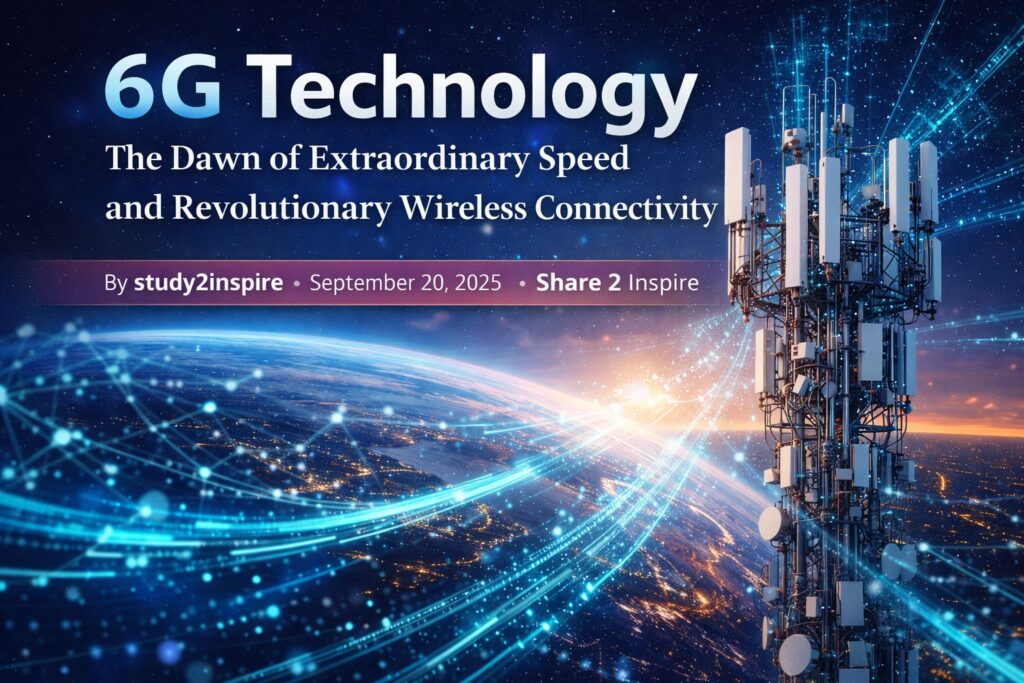
What is 6G Technology?
6G is the sixth-generation standard currently under development for wireless communications technologies supporting cellular data networks. It is the planned successor to 5G and will likely be significantly faster. Nokia announced the 6G project in 2016.
We overestimate what can be done in the next two years but definitely underestimate what we think will be done in the next ten years, i.e., 2030 and beyond. Numerous aspects of day-to-day lives will be changed dramatically by the extraordinary speed of 6G. Its tremendous speed will bring revolution in the field of telecommunications. It will be a new era of marvelous speed and modernization. We can’t really determine the intensity of the 6G revolution.

China’s Breakthrough in 6G Experiments
Recently, China has performed an amazing experiment relating to the 6G Technology. The Chinese Researchers have said that they have succeeded in recording data streaming speed while using a revolutionary technology in the Winter Olympics Games. Due to this, China will get help in leading the new generation mobile internet or 6G Technology race at the international level. For this purpose, they have used vortex millimeter waves, which are high-frequency radio waves. With the help of this technology, Chinese scientists have transmitted 1 TB of data over a distance of more than 1 kilometer in one second.
The experts of Tsinghua University of Beijing said that this experimental wireless communication line was installed in the Winter Olympics Games Compound in January 2022, which can broadcast more than 10,000 high-definition live broadcasts simultaneously.
Latest Space & Tech Discoveries
Vortex Waves: A New Era of Wireless Communication

According to experts, the use of vortex waves has begun a new area in the field of wireless communications, and this experiment shows that China is leading the world in 6G Technology. At present, electromagnetic waves are used in mobile devices, which are 2D only, but vortex waves are 3D, which tremendously increases the bandwidth.
The properties of this type of wave were first explained by British Scientist John Henry Poynting in 1990, but its practical usage was very difficult then. According to Chinese experts, development in this regard has only become possible due to the hard work of research teams all over the world.
Global Research on 6G
The European Experts were the first to perform preliminary experiments on vortex waves in the 1990s, while in 2020, the Japanese Research team succeeded in getting a 200 GBPS speed over a radius of 10 meters.
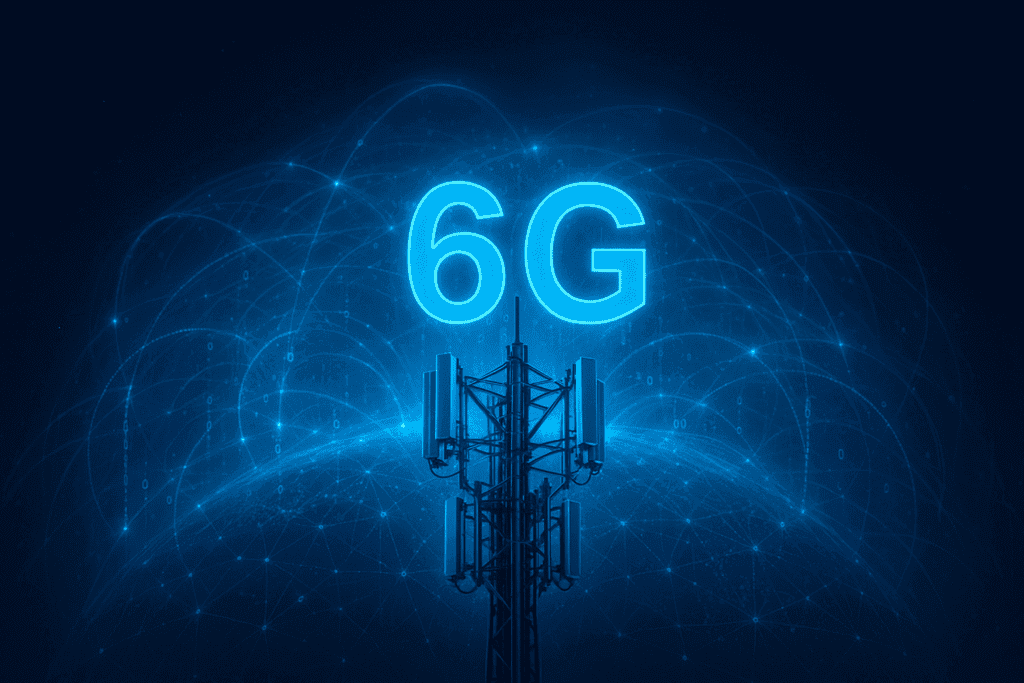
6G Technology: Real-World Use Cases & Thought Experiment
Imagine a future where 6G powers not just faster downloads, but immersive remote experiences: a doctor in New York performing surgery on a patient in a remote village via real-time holographic projection, zero delay. Or think of classrooms where students across continents join shared virtual labs as if they were in the same room.
Already, tech giants and research labs are prototyping “holographic calling”, network-connected wearables, and tactile Internet over 6G, transmitting not only visuals and audio, but also the sense of touch. While such applications still lie in R&D, their potential to reshape industries (healthcare, education, entertainment, and remote work) is enormous.
So as 6G evolves, pay attention not only to raw speeds, but to the ecosystem of services and use cases it enables. The real revolution won’t be faster phones; it’ll be what you can do with that speed.
The Future of 6G Technology
6G Technology will change the pace of the world. No doubt, nothing will remain the same. 6G Technology will be the beginning of a new era. The world will change in what physical dimensions, no one knows. This revolution in communication technology will give birth to a whole new world with the utmost possibilities.
Explore more fascinating topics in our Science & Technology section.
Frequently Asked Questions (FAQs)
Q1: What is 6G technology?
A: 6G is the sixth generation of wireless communication technology that will succeed 5G. It is expected to deliver extremely high speeds, ultra-low latency, and advanced connectivity to support futuristic applications like holographic communication, smart cities, and AI-driven networks.
Q2: How is 6G different from 5G?
A: While 5G focuses on faster mobile internet and low latency, 6G goes far beyond by enabling real-time holographic communication, tactile internet (transmitting touch), and massive AI integration. In simple terms, 5G improves today’s technology, but 6G will create an entirely new digital experience.
Q3: When will 6G technology be available?
A: 6G is still in the research and testing phase. Most experts predict that commercial 6G networks may appear around 2030, after global trials and standardization are complete.
Q4: Which countries are leading in 6G research?
A: Countries like China, the United States, Japan, South Korea, and members of the European Union are actively investing in 6G research. China, in particular, has made headlines with experiments using vortex waves for ultra-fast data transmission.
Q5: What are vortex waves, and why are they important for 6G?
A: Vortex waves are advanced electromagnetic waves that move in a spiral pattern. Unlike traditional 2D waves, they operate in three dimensions, allowing much higher bandwidth. This makes them a key technology for achieving the extreme speeds expected from 6G.
Q6: What real-world applications will 6G make possible?
A: 6G could enable:
- Holographic video calls
- Remote robotic surgery with zero delay
- Virtual classrooms and labs across continents
- Smart cities with AI-controlled infrastructure
- Fully immersive entertainment experiences
These applications go far beyond simple, faster downloads.
Q7: Will 6G change industries like healthcare and education?
A: Yes. In healthcare, doctors could perform remote surgeries in real time. In education, students could join shared virtual classrooms and laboratories, experiencing lessons as if they were physically present.
Q8: Is 6G safe for humans and the environment?
A: Like earlier generations, 6G will undergo strict scientific testing and safety regulations before public use. Researchers and policymakers aim to ensure that higher frequencies and new technologies remain safe for health and the environment.
Q9: Will everyone need a new phone for 6G?
A: Yes. Just like with previous upgrades (3G to 4G, 4G to 5G), new hardware will be required to support 6G networks. Future smartphones, wearables, and devices will be designed specifically for 6G connectivity.
Q10: Why is 6G called a revolutionary technology?
A: 6G is revolutionary because it will not only improve speed but redefine how humans interact with technology. From holographic communication to AI-powered networks, 6G will reshape industries, lifestyles, and global connectivity.